Unilateral scrapping of Kashmir water treaty is not the option anymore
Baba Umar
In Cameron Stracher’s 2011 novel The Water Wars Vera and her brother Will struggle in a country collapsed from the environmental cataclysm. The authorities hoard water, dam rivers, and even exploit clouds as glaciers vanish and polar caps melt. In their bid to find their lost friend, the duo take risks of armed groups and gluttonous corporations and ultimately learn the truth about the water scarcity.
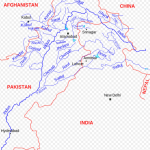
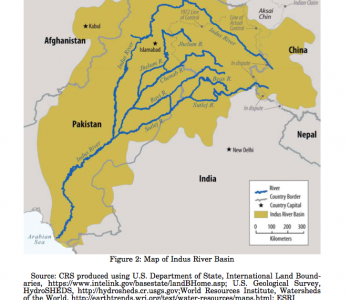
A similar story has been playing up in Kashmir since 1947 when the erstwhile British India was divided into Pakistan and India. With the division Kashmir and six major rivers flowing down to Pakistan (Western rivers) and India (Eastern rivers) became a bone of contention too. On water issues, both countries agreed to sign a World Bank (WB)-brokered treaty – The Indus Water Treaty 1960 or IWT. The treaty could not, however, make considerations for all the river-relevant changes that the future was to produce. Today Pakistan and India are locked in a bitter water conflict. Though diplomatic exertions have prevented a major escalation, both countries are entangled in legal battles as more dams and power projects come up in Kashmir. In Kashmir, politician and civil societies of all hues have been demanding a review of IWT that has been “detrimental” to the region’s economy. The current uprising in Kashmir, deadly Uri attack and the subsequent Indian threat to scrap IWT has added another dimension to the Pakistan-India rivalry.
Pakistan and India are dangerously energy starved and nowhere close to an agreement on disputed Kashmir but the impact of climate change and population pressures are offering a forecast on their water conflict that is anything but encouraging. Predictions that the next major war will be over water are common. In fact, the Washington D.C based Rockefeller foundation predicts a water war in 2027 between both the countries. But is such a scenario realistic? Could both the countries amicably end their water disputes?
1960 Water Treaty
Between 1905 and 1908, it was a Swedish explorer, Sven Hedin, who became the first European to have discovered the mouth of the river Indus (or The Lion River) in Tibet’s Sangi-Kabab area. Four decades later, the British divided the Indian subcontinent. The land division occurred without considering the irrigated boundaries.
On April 1 1948, India taking advantage of its control over the head works, cut off the supply of water in every canal that crossed into Pakistan. India briefly restored the flow at a price. In July 1951, Pakistan accused India of cutting water supplies to its Wagha and Bhaun villages. Both sides traded accusations until Davil Lilienthal, who had won pre-eminence in the US as head of the seven-state Tennesse Valley Authority (TVA), made a trip to India and Pakistan. Lilienthal described the dispute as “a Punjab powder keg” in his articles. He would observe: “No army, with bombs and shellfire could devastate a land as thoroughly as Pakistan could be devastated by the simple expedient of India’s permanently shutting off the sources of water that keep the fields and the people of Pakistan alive. India has never threatened such a drastic step…but the power is there nonetheless.”
The interlocutor proposed that the whole Indus system be developed as a unit while a corporation – with representation of both sides and the WB – can work out an operating scheme for storing and distributing water.
A month later, WB made a “good offices” offers to Pakistan and India and as negotiations continued, it became clear that Lilienthal’s idea of involving “brothers on common project” had ignored the endless hostility between both sides. The waters would have to be split instead. The WB in 1954 proposed that Pakistan be given the waters of the three western rivers and India the Indus’ three eastern tributaries. Hiccups continued until both sides agreed to sign a water-sharing agreement in 1960. The vice president of the Bank, William A.B Iliff, would remember using “cajolery” to press both sides.
Water Allocation and Disputes
The treaty allocates entire rivers and tributaries, instead of water volume and has remained relatively intact for over 50 years. However, the IWT’s long-term effectiveness is uncertain in light of Pakistan-India tensions over Kashmir. There is a doubt whether IWT can address India’s mounting use of the waters for hydroelectricity and Pakistan’s growing need for same waters for agriculture.
Pakistan-based Arshad H Abbasi, a trans-boundary water expert, tells me there are some serious emerging violations “as India plan to construct 155 hydropower projects in Kashmir” and that “India isn’t sharing any information pertaining to the detail design, structural drawings and design calculations of the upcoming projects.”
India began building major power projects in Kashmir in 1970s. India has 33 projects at various stages of completion on the rivers in Kashmir. Currently, the most controversial dam project is the proposed 330-megawatt dam on the Kishenganga River (also called Neelum in Pakistan-administered Kashmir) – a tributary of the Indus. Its construction began in 2007 and is almost over. The waters are to be diverted through a 24km tunnel for power production and the rest of the water flow is supposed to join the Wullar Lake and ultimately run through Jhelum to Muzaffarabad (in Pakistan-administered Kashmir), dodging the 213km long Neelum on which Pakistan is also building its own Neelum-Jhelum Hydro-Electric Project (NJHEP). Pakistan has also objections regarding 850 MW Rattle hydropower project on Chenab river that, it says, involves faulty designs. The country has moved the neutral experts over differences on these projects.
Earlier in 2013, the permanent court of arbitration decided that, “India shall release a minimum flow of 9 cumecs into the river below the KHEP at all times…” and “At any time at which the daily average flow in the river immediately upstream of the KHEP is less than 9 cumecs, India shall release 100 percent of the daily average flow.”
While media and officials on both sides hailed their respective countries for winning this case, the South African water expert John Briscoe observed that India “won another battle, but lost the war”.
The rush to meet energy demand through hydropower is occurring in both countries amid shortage of adequate access to energy. The number of dams under construction and their management is a source of significant bilateral tension. Briscoe argues that if India builds all its planned projects on the Indus, New Delhi will be capable of holding up about a month’s worth of river flow during Pakistan’s critical dry season, “enough to wreck an entire planting season”.
“The treaty worked well in the past, mostly because the Indians weren’t building anything,” argues Briscoe, and “This is a completely different ballgame. Now there’s a whole battery of these hydro projects”.
Mistrust threatens IWT’s stability. Any perceived decrease in the flow of waters augments it, no matter whether caused by India’s activities or climate change. The Economist argues that the Indian bureaucrats fuel these fears with “obsessive secrecy” about water data.
Climate Change
Climate change threatens Kashmir, already worn-out by the armed conflict between over half a million Indian soldiers and about a dozen rebel groups fighting for independence or merger of the territory with Pakistan.
In a 2012 interview, Kashmiri scientist Dr. Nazir Ahmad Masoodi told me that “almost 1 lakh cubic feet of timber is smuggled from disputed Kashmir every year, leading to the illegal felling of almost 10,000 adult coniferous trees in the Kashmir Valley which could turn Kashmir into Ladakh in the next 40-50 years.”
“Climate change indicators are quite loud and clear in the region and have impacted the snow and glacier resources in the upper Indus,” glaciologist Shakil Ahmad Romshoo tells me.
The Indus supports about 90 percent of Pakistan’s agriculture. Scientists say a number of glaciers in the area are rapidly receding due to climate change. The large-scale human intervention in the form of unorganized pilgrimages and mindless tourism too is upping the temperatures resulting in the fast melting of glaciers.
“The stream flows emanating from the region has significantly decreased. It is pertinent to mention here that the IWT (Indus Water Treaty) did not have any clause on climate change impacts on stream flows,” Romshoo says.
The interlinking of rivers (or ILR) project in India and mismanagement of existing water supplies augments the pressure on both countries.
The increase in global temperatures and number of dams – as a glaciologist quoted by the Economist calls them ‘water bombs’ on the Indus in an earthquake prone zone – thus calls for a review of the treaty.
In fact, a top water expert (preferring anonymity) who worked with the WB on a report about Indian dams argues that about 15 large Indian dams in the Himalayas are “dodgy dams” and shouldn’t have been commissioned at all.
“In its survey, two of these [dams] were found adequate but not earthquake-proof. Other 13 should have never been built. It found a lot of corruption in Indian dam building system. The bank didn’t publish the survey though,” the expert told me recently in the UK.
Water politics within Kashmir
Kashmir can produce 20,000 MW of electricity but currently, production is mere 2556 MW. Power shortages are normal. Prime reason being most of the electricity is generated by Indian enterprise National Hydroelectric Power Corporation (NHPC). But it shares mere 12 percent with the region as royalty. It trades the rest of the energy to the Indian provinces. At peak hours, NHPC sells the same power to the Kashmir government at inflated rates. Recently a senior pro-India leader equated NHPC to the East India Company “sucking all electricity” generated on “our waters”. Others see IWT ‘discriminatory’ towards the disputed region arguing that India signed IWT without then Kashmir PM Bakshi Ghulam Mohammad.
While successive governments inside India-administered Kashmir want IWT to be amended and NHPC royalty increased, New Delhi continues to block concessions. It also refuses to offer counter-guarantees to the foreign companies willing to invest in Kashmir’s power projects.
Besides Kashmir dispute, the new battle cry – water, of the non-state actors is threatening to add a new dimension to the conflict. Some Pakistani officials continue to blame India for water shortages in the country while India continues to dismiss such accusations. Articles and think-tanks keep on appearing in the Indian media suggesting India “should leverage this natural advantage” while as rebel groups vow to fight India’s “water terrorism”. In fact, the US Senate’s Foreign Relations Committee report of 2011 also warns that unless Pakistan and India are able to resolve their water disputes amicably, a future war between them cannot be ruled out.
Recently when the Royal Institute of International Affairs or (Chatham House) launched a survey to find the attitudes to water in south Asia, it found the challenges “exacerbating” trans-boundary water concerns in the region.
I spoke with Gareth Price, senior research fellow at Chatham House in his London office, who suggested, “There is a scope of updating it (IWT).”
“Ten years ago if you would talk about India-Pakistan tension one would end up saying water is one good thing in their relationship. But in last ten years, it suddenly shifted. Because there are more people, there is potentially less rain or more climate change related things …more flooding or there is more encroachment…”
The way out
Pakistan’s agricultural economy is a bet on Indus waters. Imagine the sixth most populous country torn apart by lack of water and changing climate with nuclear weapons and one of the largest standing armies in the world. Such a scenario could have dangerous ramifications on the entire south Asia. As suggested by Anatol Lieven in his book Pakistan – A Hard Country, “those Indians who would be tempted to rejoice in Pakistan’s fall should,therefore, consider that it would almost certainly drag India down with it.”
IWT was signed in 1960. The population of both Pakistan and India is no longer same. It’ll increase more by the middle of 21st century making its review vital. IWT also didn’t take into account the climate change aspects. Its amendment also becomes important since people in disputed Kashmir are seeking a greater say in the affairs of their resources.
Pakistan and India must consult each other on all major projects on the Indus river system that might have hostile environmental impact across borders. Both nations must improve domestic water management and encourage less water-intensive crops. Improved infrastructure could help plug power distribution losses while both the countries need to increase the rainwater-harvesting projects wherever possible as well.
Kashmir must radically limit human intervention in the eco-fragile zones. Both Pakistan and India should also examine the environmental degradation in the entire basin. Currently, there is no mechanism in the IWT to fund ecological preservation.
Pakistan and India could jointly build dams and share benefits. This could lower their tensions over water sharing. But reliance on hydroelectricity could be avoided by adopting solar energy instead.
Besides Kashmir, disputes linked to water often snowball into major controversy or become a costly legal affair in the courts of arbitration. Solving Kashmir dispute could tone down their water rhetoric and ultimately lead to a win-win situation over the usage of shared waters. The key is also not to heed to the bluster we see in the Indian TV channels and the social media over recent Uri attacks. Because the mouth of The Lion River or River Indus and its major tributaries lie in China (Tibet), a strong Pakistan ally. Beijing won’t hesitate to hedge it against India in case the treaty is scrapped unilaterally.
The piece is excerpted from my 2016 research paper on the water wars between Pakistan and India.