Baba Umar
January 2011
Rising Kashmir
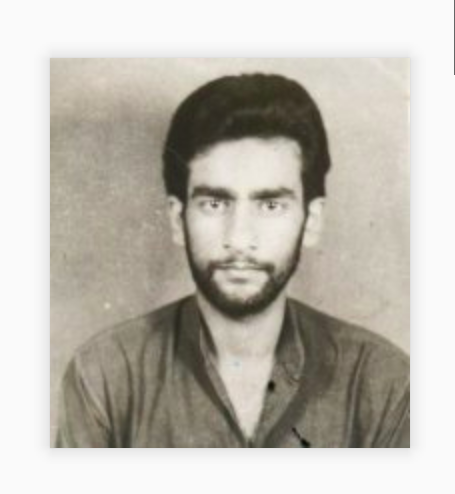
It was the morning of January 21, 1990. The sun came up without much sparkle but it shone on young Rauf’s face for the last time. For, by noon, he was lying on the ground in his favorite blue jacket and green shoes, his body pierced by a hail of bullets.
Now, two decades later, his family and those who saw him getting killed along with 52 other peaceful protesters in Kashmir’s first massacre (since the armed rebellion broke out in 1989 against New Delhi’s rule), try to look back on the event that gave birth to a generation of angry young men, a violent uprising and a separatist sentiment never seen before in Kashmir.
That morning, Abdur Rauf Wani (24) and his father G A Wani, a government employee, watched from the window a huge procession passing through Maharaja Bazar. The demonstrations were sparked by the news of molestation of women in the old city, strict curfews and restrictions.
It was also just a day after New Delhi appointed Jagmohan Malhotra as J&K’s Governor, in a bid to control mass protests by Kashmiris.
In the street below, Rouf saw men in thousands raising fists with slogans ‘Hum Kya Chahte… Azadi’ (We Want… Freedom). Nothing unusual, as people had grown used to these reminders. But Rauf, unable to contain the surge of emotions within, turned to his father and what followed was a little “more unusual”.
“Bauji, this will be now begairti (disgrace), should we not join now,” Zulehama Banday, Rauf’s elder sister recalls his brother’s conversation with their father.
Wani looked back, waited for a moment and then nodded his head.
“Should I go,” Rauf again insisted. “Yes,” his father replied.
Zulehama says it was the first time that the family had okayed Rouf’s request to join the peaceful protests.
Rauf was soon away, smashing a flower vase in a hurry. He stumbled but got up immediately. He performed ablutions, fixed the shoelaces, adjusted his jeans and slid both arms in the blue jacket that he had slung on his right shoulder till then.
“On the road a neighbour tried to stop him but he wouldn’t,” recalls Zulehama, who by now had joined her father at the window to see Rauf disappear in a swarm of young men.
The long strip of rally that begun from Jawahar Nagar and Ikhrajpora, Rajbagh neighbourhood had reached Budshah Chowk. Earlier proposed to stopover outside the UN’s office at Sonawar, people in the front decided to drum up more support from the inner city. The crowd marched towards Maisuma neighbourhood, which would then lead it to the inner city. It reached the Gaw Kadal Bridge. When the front-liners of the crowd were halfway across the Gaw Kadal, the paramilitary Indian Central Reserve Police Force (CRPF) opened fire with automatic machine guns from three directions. In the next few minutes, the bridge was littered with corpses and blood. The first day of Governor Jagmohan’s rule would pass in bloodshed.
Muhammad Altaf Qureshi (50) remembers how the march was stopped with automatic machine guns and how a fearless young man braved bullets from an unremitting gun nozzle.
“Without any provocation and warning, they fired on us,” he recalls. Qureshi, who was in the third row, says the sound of unrelenting gunfire triggered a stampede on the wooden bridge. The charge pushed him on the deck and soon blood-stained bodies were dotting the spot. Whosoever tried to stand on his legs would be fired upon.
In this melee of bullets and screams, Qureshi noticed a young man getting up, pushing aside with his hands both the dead and alive.
“A trooper was showering bullets from a short distance and this young man shielded people by blocking the soldier’s view,” Qureshi recalls. “He took all the bullets on his chest.”
The youngster was none other than Rauf. Soldiers had emptied their carbines by puncturing Rauf’s abdomen and chest. The act of bravery saved scores from getting killed. Rauf finally collapsed, his face upwards; blood painting his blue jacket and green shoes with red.
Qureshi watched silently. He was motionless. The crowd had dispersed. “Mayhem, Massacre, God” were the cries he heard from the receding crowd. While on the bridge, troops were leaping on the corpses, kicking survivors and finishing them off. Qureshi pretended dead, hiding his face under someone’s blood-splattered torso.
“I preferred to hide under the bodies, knowing for sure I will be shot if I made a slight movement. I closed my eyes and remembered Allah and recited Kalima without letting a sound come out,” he recalls. Then the image of his three-month-old daughter flashed in his mind. He soon heard policemen speak in Kashmiri, shouting loud if someone was alive.
“For a while, I pretended dead,” he says.
As if a mere sack of flesh, blood, and bones, the scene had deadened his body. He was picked up by a policeman who inquired if he was alright. He saw policemen heave the bodies into a truck, over a tarpaulin and disappear from the spot.
“I was taken to a nearby fire station, from where I called up my home. They were waiting for my corpse after a friend and survivor informed them about the massacre,” recalls Qureshi.
The news travelled to home faster than the body of Rauf.
Zulehama, the other siblings and their father panicked. Rauf had wished martyrdom when a funeral procession passed by the family’s house months ago. Zulehama watched their elder brother Parvez Wani readying for Police Control Room (PCR) at Batamaloo, where the injured and dead were ferried to.
At PCR gate Parvez struggled hard to enter the premises, as relatives of victims had already started to pour in. Back home, Rauf’s father was restless. He had allowed his son to join the march. A sense of guilt had overtaken him. Others in the family were crying and consoling each other, assuming Rauf might have swum the stream below the wooden bridge. Or he must have stayed at someone’s house. “We were not sure, however,” Zulehama says.
But at PCR, Parvez was face-to-face with reality: he was handed the bullet-ridden body of his brother. Thirty-two holes, he counted, had punctured Rauf – the highest number of bullets fired on anyone in the rally. “And when the body reached our home…everyone……” Zulehama is unable to continue.
It was not for the first time that he had risked his life to save others. In 1984, Rauf risked his life to save a Sikh labourer who was shot in the head while he was lacing his shoes in the street of Wazirbagh. The labourer had cried for help, and when many shut their doors and windows, Rauf rushed out and took him to the nearby hospital.
“He was 18 then,” Zulehama says. Three years later, in 1987, Rauf along with hundreds of young men were dragged to jail for supporting a political party Muslim United Front (MUF). Rauf was bundled into the notorious PAPA-2 interrogation chamber for 21 days.
Rauf was buried at a graveyard in Sarai Bala, besides Dastageer Sahib Shrine. Soon after, the family sold their property and moved to another locality. In 2006, Rauf was posthumously honoured with Robert Thorpe award. ( Thorpe is considered to be the first guest martyrs in Kashmir.)
The incident triggered massive outrage even as condemnations poured from across the world.
Noted writer and historian, William Dalrymple, who reached Kashmir the following day also wrote about the massacre. In his ‘Kashmir-The Scarred and the Beautiful’ he writes: “When I got to Srinagar the following day, I went straight to the city hospital. Every bed in the building was occupied and the overflow lined the corridors. One man, an educated and urbane city engineer named Farooq Ahmed described how after the firing, the CRPF walked slowly forward across the bridge, finishing off those who were lying wounded on the ground.”
When the shooting began, Ahmed had fallen flat on his face and managed to escape completely unhurt. “Just as I was about to get up,” he told me, “I saw soldiers coming forward, shooting anyone who was injured. Someone pointed at me and shouted, ‘that man is alive,’ and a soldier began firing at me with a machine gun. I was hit four times in the back and twice in the arms.”
Seeing that he was still alive, another soldier raised his gun, but the officer told him not to waste ammunition. “The man said I would anyway die soon.” Ahmed waited forty-five minutes while the soldiers went through the piles of dead bodies, finishing off survivors and kicking corpses near the edge of the bridge into the river.”
Zulehama knows police had registered a case which was, however, closed in 2005 and those involved in Kashmir’s first massacre were declared ‘untraceable’.
But when I ask her what does she think and if she wants the case reopened, her silence is coupled with soaked eyes. For a moment she speaks nothing. Then she says: “Yes. It must be.”
“When I think of my brother,” she says, “the thoughts are not just of the wonderful time we shared. It is of the brutal way in which he was killed, the irrationality of the act, and ultimately, the offenders and the Indian justice system.”
This story first appeared in Rising Kashmir
http://www.risingkashmir.com/index.php?option=com_content&task=view&id=20118&Itemid=29
