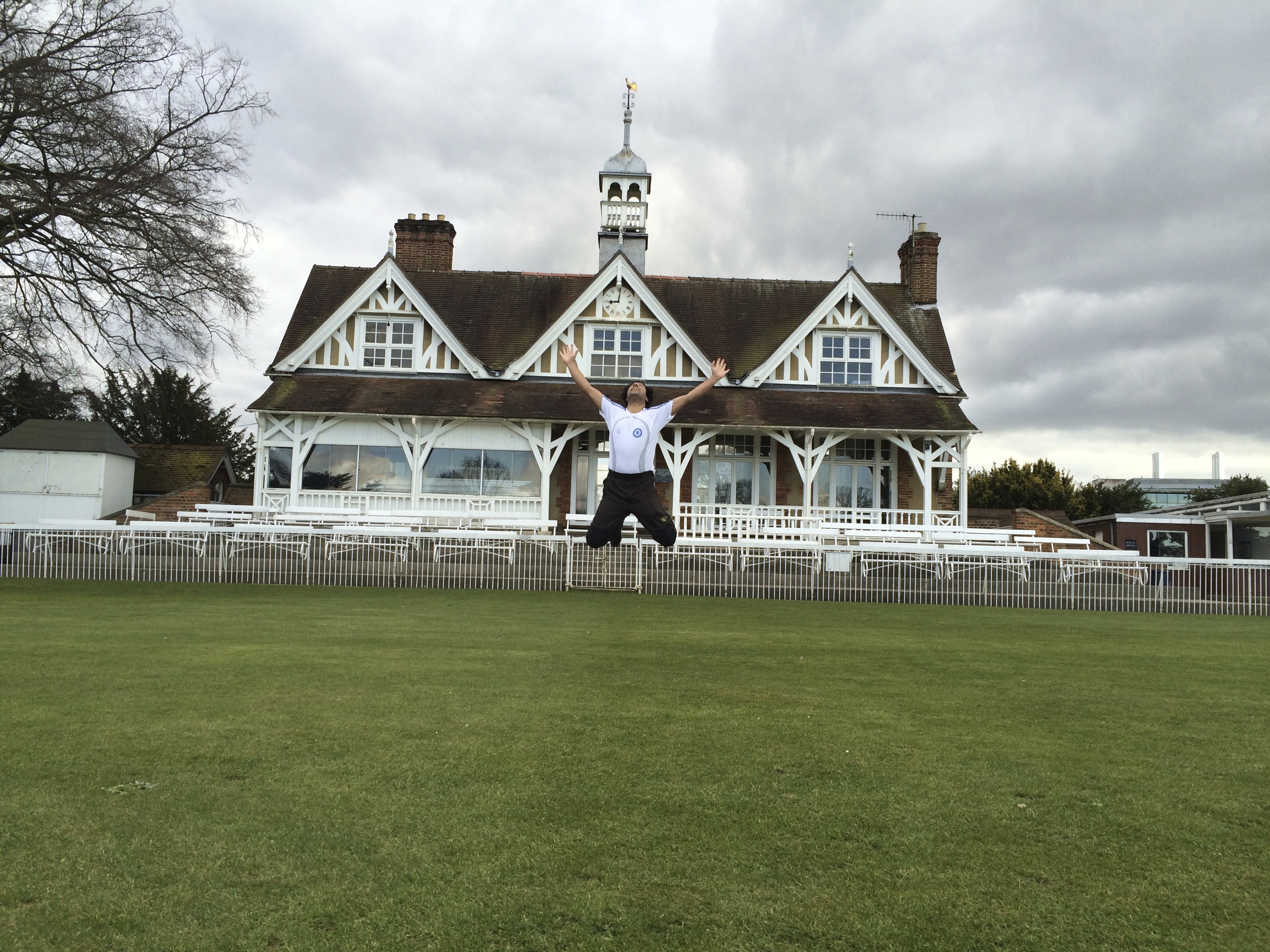
London first stuck in my mind like glue when I was growing up in Kashmir. The familiar parental refrain would be ‘Zan Chi Landan Gatsun (as if you’re going to London) as they prepared me for school or any function. London must be beyond the Zabarwan mountains, I used to think.
So, in 2016, I finally got to visit the United Kingdom. The culture shock, in the beginning, was enormous. I thought the clock has been moved forward by 300 years. The fashion, mannerism, cheerfulness, multiculturism, buildings, roads and the overall history were overcoming. I found London tremendously practical and materialistic.
I had seen London only in movies on the TV sets of Kashmir – plagued by perpetual conflict, militarised minds, and borders. But as days passed it occurred to me that I am in familiar territory. I started finding resemblances between the UK and Kashmir. London appeared home away from home. Its lofty Big Ben looked like Kashmir’s Clock Tower (or Ghanta Ghar) – a grandpa figure watching its broods move around. The Thames replaced river Jhelum, Kashmir’s lifeline.
In Kashmir when people speak of the British, it reminds one of the great old days of foreign tourism dominated by the British wanderers and the American hippies. Today it is either the people from Indian plains avoiding the scorching summer sun or the Israeli vacationers trying to figure out if Kashmiris are among the lost Jewish tribes or if prophet Jesus is really buried at Kashmir’s Rozabal neighbourhood.
Our luxurious houseboats are a legacy introduced by the British to Kashmir lakes.
Some of the oldest structures in Kashmir – bombed in the deadly fighting over the years – had British make up.
Even the Grindlays Bank – now acquired by local Jammu and Kashmir Bank – overlooking the meandering river Jhelum gives a feel of London in Kashmir.
The upscale market Polo View looks like any shopping lane of the Oxford. The mighty Chinar trees replacing slightly short maple trees.
Who could forget cashmere! The mountain-goat-drawn wool and the shawl industry continue to bind the British fashion aficionados with the local Kashmir artists. A cashmere shawl of 1860 and a mid-nineteenth century English lady’s surcoat formed of Kashmir shawl pieces displayed inside the Ashmolean Museum at the Oxford explains further the colonial connections between both the regions.
Then, the weather. It’s pretty much similar. Only that it doesn’t snow in London these days and Srinagar – the winter capital – does get its annual share though very small despite Kashmir’s almost zero contribution to the massive global pollution. I heard this year; it didn’t snow in Srinagar either.
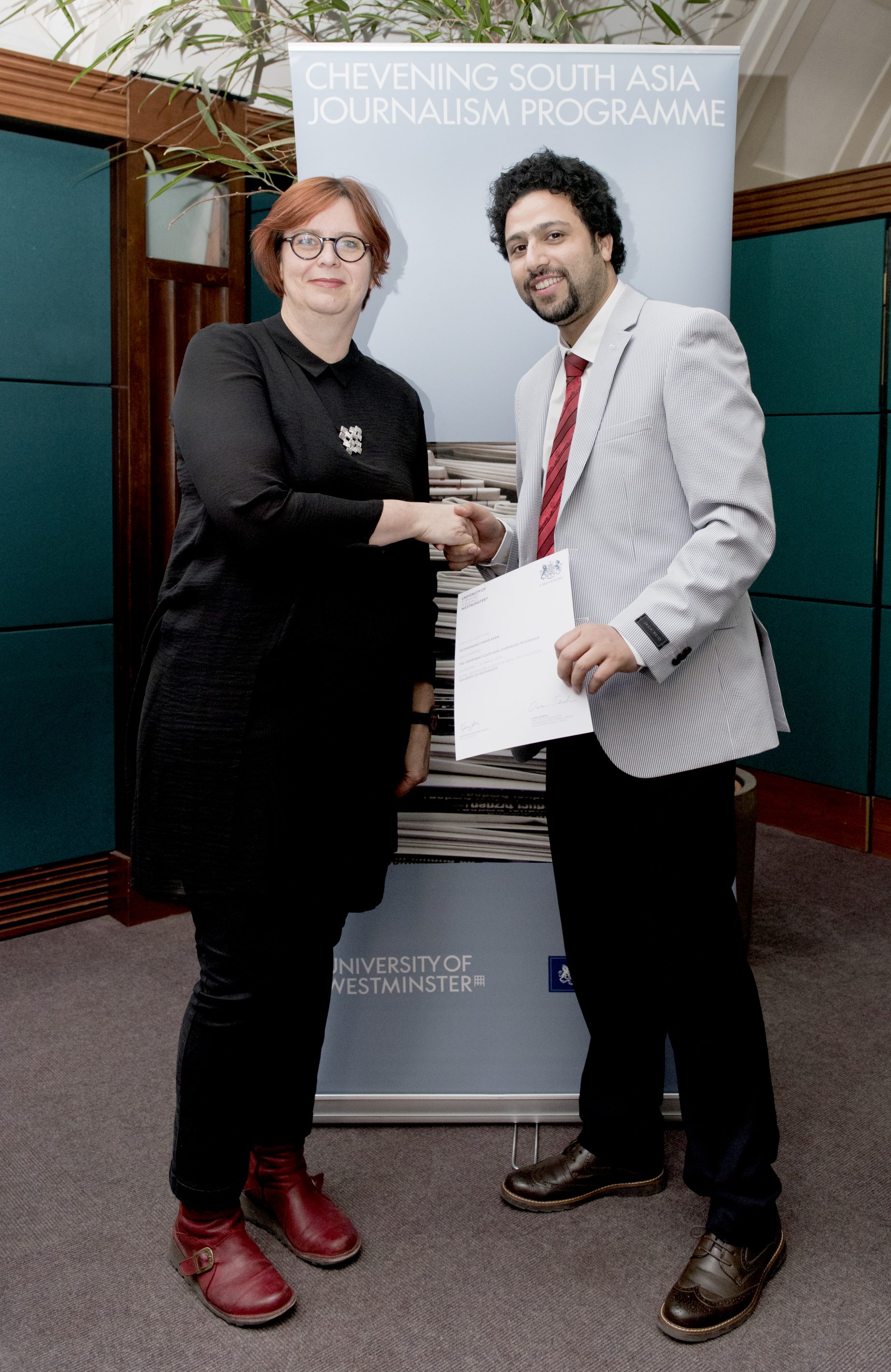
It was at the fag end of January when I was told about my selection for the prestigious Chevening South Asia Journalism Program (SAJP) fellowship. I was soon packing my stuff in Oman and rushing to New Delhi first where my visa, flight, and the official letters were prepared.
The British Airways jet soon soared the Delhi skies. It crossed into the airspaces of Pakistan, Afghanistan, Turkmenistan and the Caspian Sea. I mapped the flight route keenly on the small seat-back TV screen. The jet crossed into Russia, Ukraine and Poland. Germany, the Netherlands were the next until the flying machine hit the tarmac of London. The nine-hour or so journey was over.
Some friends would always complain about frisking at Heathrow airport. I was supposed to get goose-bumps. But I found it was normal. In fact, Kashmir has the world’s strictest airport followed by Tel Aviv’s. The fright of over-frisking and scans at Heathrow proved pure exaggeration.
The first day in London began with a trip in the Thames. I was cheery. So were the seven Pakistani and six Indian journalists who would be my colleagues and friends for the rest of the two months.
The winter sun shone like a bride in the clear London skies. Thames’ sparkling waters, flying gulls and the tour guide’s narration of London’s history meant the entire trip was going to be delightful and educative. The jet lagging continued for a week though. Many times I woke up at two in the night thinking it’s morning by the Asian standards. The body clock desperately needed adjustments.
The United Kingdom is a geographic amalgam of England, Wales, Scotland and Northern Ireland regions. Scotland recently chose to stay with the UK in a referendum vote thus ending speculations of a new country emerging from the northern tip of the island nation. Allowing such resolutions is the hallmark of mature democracies like the United Kingdom. Mature, because the region I come from is a witness to militarized governance that peddles democracy. A faith-based line (or peace line) divides protestant and catholic neighborhoods of Northern Ireland. From 18 in the early 1990s, there number rose to 48 since the Good Friday Agreement of 1998 or Belfast agreement – reached after nearly two years of talks and 30 years of conflict that killed around 3600 people and injured thousands.
Who knows if the same faith line would be drawn in Kashmir one day ending the world’s oldest dispute on the UN agenda? The Irish-model has been for long proposed to be one of the solutions to Kashmir dispute that will give away Hindu and Muslim provinces of the region to India and Pakistan – both nuclear rivals locked in a bitter conflict over the Himalayan territory since 1947 when Britain ended its rule in the sub continent. This is something on the lines of Sir Dixon Plan of 1950 as well. Though the Dixon plan proposes Chenab river as a faith-separating border between Pakistan and India.
Chevening SAJP fellowship allows a peek into UK media practices and the politics of the Kingdom. I was told print media in the UK is fast shrinking and has declined by almost 40 % in the last ten years only. The Independent stopped publishing recently. In fact, I grabbed the last Independent on Sunday copy at the airport (March 20) while flying back to Muscat. The last print edition of the Independent was published on March 26. At its summit, sales hit around 428,000 copies a day. Twenty-five years later, the number of copies sold was only 28,000.
Online media has offered strong belligerence to the traditional print media over the years. Sales of almost all print outlets including The Guardian, The Telegraph, Daily Mirror, and others have gone down drastically. Media jobs are hard to get. Downsizing is rampant. Interestingly, free paper London Evening Standard is the winner. Formed some 188 years ago, it has a circulation of around 900,000 copies. In 2015, it urged people to support the Tories in the election. It’s handed over to passersby and pedestrians at all busy nerves of London. Others grab a copy at the kiosks inside tubes, shops, and supermarkets. 90 percent of the waste at the tubes, buses, and parks could include this paper. Rest is often pigeon droppings.
In the past few months, debate on Brexit – wordplay of ‘Britain’ and ‘exit EU’ – has dominated the news space. Come June UK will decide whether or not it should remain in the European Union. Refugees of Middle East and threats from ISIS are often discussed in news and commentaries. UK’s flagship anti-radicalization strategy – Prevent – is also debated often. Pummeled by critics it’s seen as pure racial, cultural and religious profiling that targets Muslims mostly.
I discussed this ‘strategy’ with a Kashmiri family that has been living in the UK for the past 48 years outside London. “Those days the UK needed us. Today it doesn’t,” they said describing their flight to UK from Mirpur (Pakistan-administered Kashmir or PaK) in 70s and growing Islamophobia in this decade that has torn the social fabric in most of the country.
Most of the Pakistanis in the UK are those who came from PaK as economic migrants. Besides remaining media-illiterates, they remain fragmented and lack professional training in working with the media thus allowing the dominant narrative work against them.
In the words of a top Pakistani government official stationed in London, “Our Kashmiris need to adopt the UK. It’s their home now. But they are still stuck in a time warp. A time warp of 70s.” While the immigrants of other Asian countries have excelled in studies, Pakistani Kashmiris have lagged way behind. Their youngsters are more concerned about making money by hard work than education. The marriages often occur amongst first or second cousins who share the same lineage or Birdari (clan) back in PaK.
Nowhere else is Kashmiri diaspora so bigger than the one in the UK. However, this diaspora unlike Palestinians remains mired in its own issues and hence is considered too weak to strengthen Pakistan’s soft power in the UK or lobby hard for the resolution of Kashmir dispute.
I also found Pakistan and India both remain critical and important to the UK’s foreign policy. The Chinese investment of $46bn in Pakistan is looked upon with doubt despite China investing $60bn in the UK too. With India, the UK looks forward to a strong relationship. Both countries are on the same page when it comes to India’s bid to enter permanently in the UNSC or Global Nuclear Suppliers Group.
While the UK wants to see de-escalation of tensions between both Pakistan and India, its stance on Kashmir is “neutral”. This despite the fact that UK is very much part of the conflict, first since 1846 when the Britishers signed a notorious Amritsar Treaty with Hindu Dogras that allowed the latter to extend their rule to Muslim-majority Kashmir. Kashmir was sold for 7.5 million (nanakshahis). The Dogra rulers also gave one horse, 12 shawls, goats of approved breed (six male and six female) and three pairs of Cashmere shawls to the Britishers. Then again in 1947, a hurried and mindless partition of the sub-continent killed over a million people, both Hindus, and Muslims, which also left the fate of Kashmir undecided. UK is also signatories of the various UN resolutions on Kashmir that call for demilitrisation and plebiscite of the entire region. In Kashmir, the UK is seen as part of the conflict if not the active player and as having a moral responsibility to help end the dispute in the region.
The fellowship also offered me an excellent opportunity to interact with all the Pakistani colleagues who came from different backgrounds and circumstances. One thing I will always cherish is their love for Kashmiris. The male journalists were very vocal and had very strong accounts to offer. Every night we would play Pashtoon, Kashmiri or Punjabi songs and relish the delicious food cooked by a Pashtoon journalist. Debates over cricket and then conflict would often end up with pledges to work hard for our societies. While we shared our stories, one thing that we found common was we all came from unassuming families and have been part-time traders at a certain point of our struggling student lives.
Some of the best brains for this fellowship came from India as well. It was a group of very strong journalists who knew their work and have already won laurels for their effort in journalism. It was fun to listen to their arguments and share my experiences as a Kashmiri journalist.
Together we spent a great time visiting many UK media outlets and NGOs. Our visits to the offices of the BBC, the Economist and NGOs for eg, English PEN, Chattam House, Reprieve and Transparency International were momentous. The topics we heard experts speak on were meaningful. There was not just one. The insights of Andy Sparrow on ‘Media Credibility in the Age of Internet and Insurgency’, Jean Seaton on ‘Intolerance and Media: Case study Northern Ireland’, Rosie Thomas on ‘Bombay Before Bollywood: Film City Fantasies’ and Aaqil Ahmed on ‘Challenges and Opportunities of Religious Programming in the UK’ were outstanding that offered a taste of UK journalism practices and the anxieties involved. Listening to Kashmir dispute expert Victoria Schofield at the House of Lords was incredible. She pushed for resolution of Asia’s eyesore saying, “Kashmir has become too dangerous to neglect.”
Journalists at the War Zone Freelance Exhibition offered a sneak peek into the dangerous world of freelance journalism in Middle East. The stringers and freelancers remain underpaid and are rarely acclaimed despite their great role in getting out stories. The debate the Frontline Club has provoked over the “fate” of freelance journalism in the conflict zones will surely help improve the standards of journalism we may witness on the current and upcoming upheavals.
There are no words to describe how much I loved to hear James Meek speak about his work on how the wealthiest and most powerful in the West have turned the Robinhood myth to their advantage. I had a great time speaking with the environment students at the Oxford who had gathered at the Reuters institute-sponsored Science and Media workshop. It was a great feeling to share the stage with veterans like Roger Harrabin, BBC News Environmental Analyst, and other climate experts to discuss ‘what should be the role of the media in framing a post-Paris climate agenda?’ The gathering was also significant since my research topic touched the water aspects of the Kashmir conflict both the nuclear rivals Pakistan and India are locked in for the past seven decades now.
My experience in the UK also included a trip to the House of Commons and House of Lords. In free time we strolled through posh South Kensington neighbourhood, Oxford Street, Trafalgar, Marble Arch, and Hyde Park, passing some iconic landmarks on the way. Researching at the grandiose British Library was real fun. The building houses manuscripts, books, and records of outstanding importance for all eras, countries, and disciplines.
The visit to the Imperial War Museum was very useful. One unusual thing that caught my eye was a Pakistan-made Honda motorbike captured by the British forces from the retreating Taliban scouts in Afghanistan. The information plate pasted nearby reads: “Lacking western technology, the Taliban gather intelligence the old fashioned way – in person”. IWM (Imperial War Museum) is a great place to see. It tells the story of people who have lived, fought and died in conflicts involving Britain since the First World War.
The final week ended with a debate on ‘Intolerance’ that has recently become a headline issue in South Asia. We discussed why and why now and does intolerance take different forms in the UK, India, and Pakistan? We discussed how media has the tendency in these regions to stoke intolerance and what impact does intolerance has upon culture and freedom of expression?
Overall the fellowship was productive, positive, and enjoyable. The entire trip forced me to question what I thought I knew, and learn how much I had yet to explore in this shared world. I left London with a heavy heart but I found comfort in the hope that I am parting with my programme coordinators and colleagues only to meet again.
