Words by Baba Umar \ Photos by Abid Bhat
June 2015
India-administered Kashmir
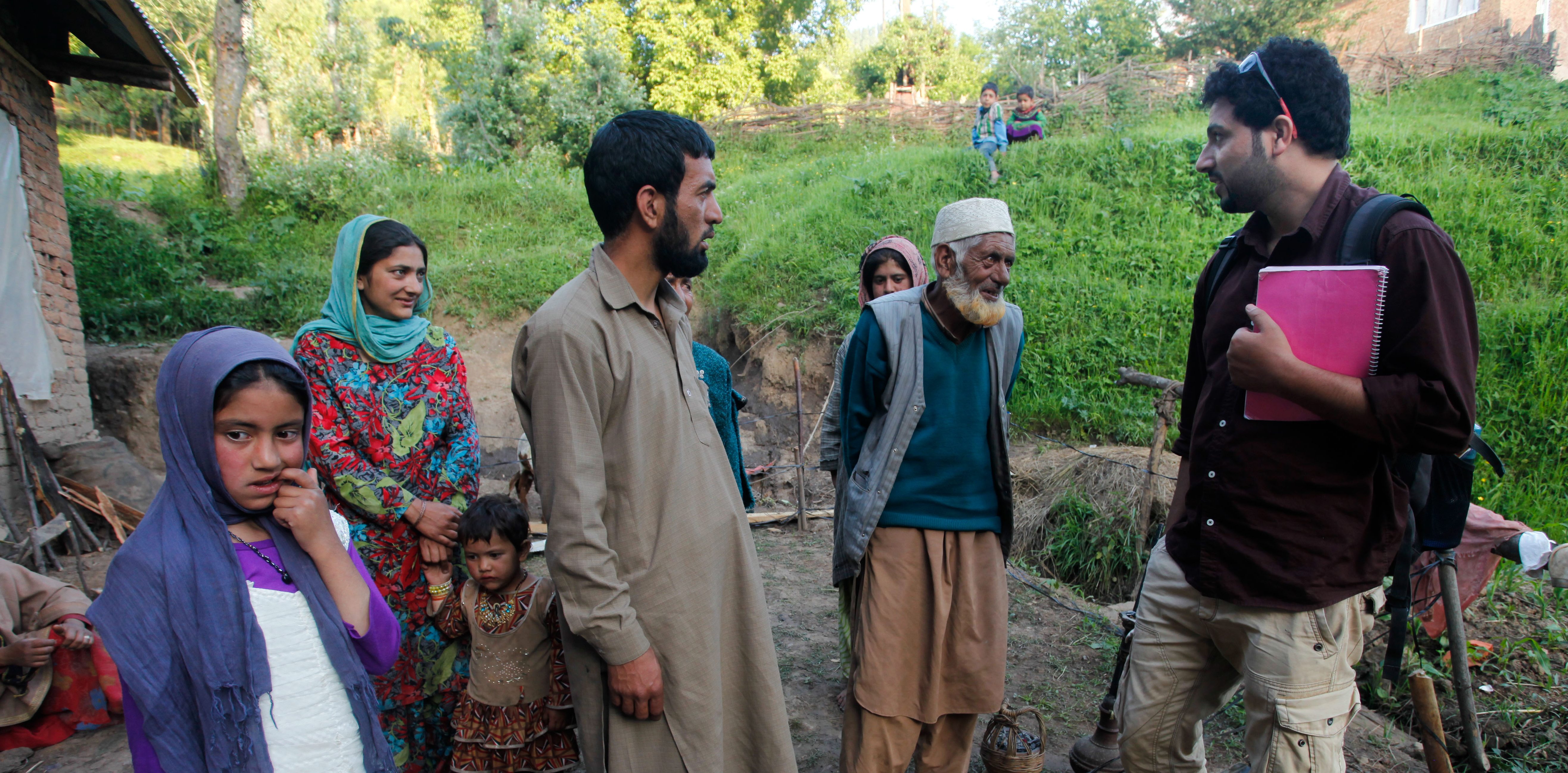
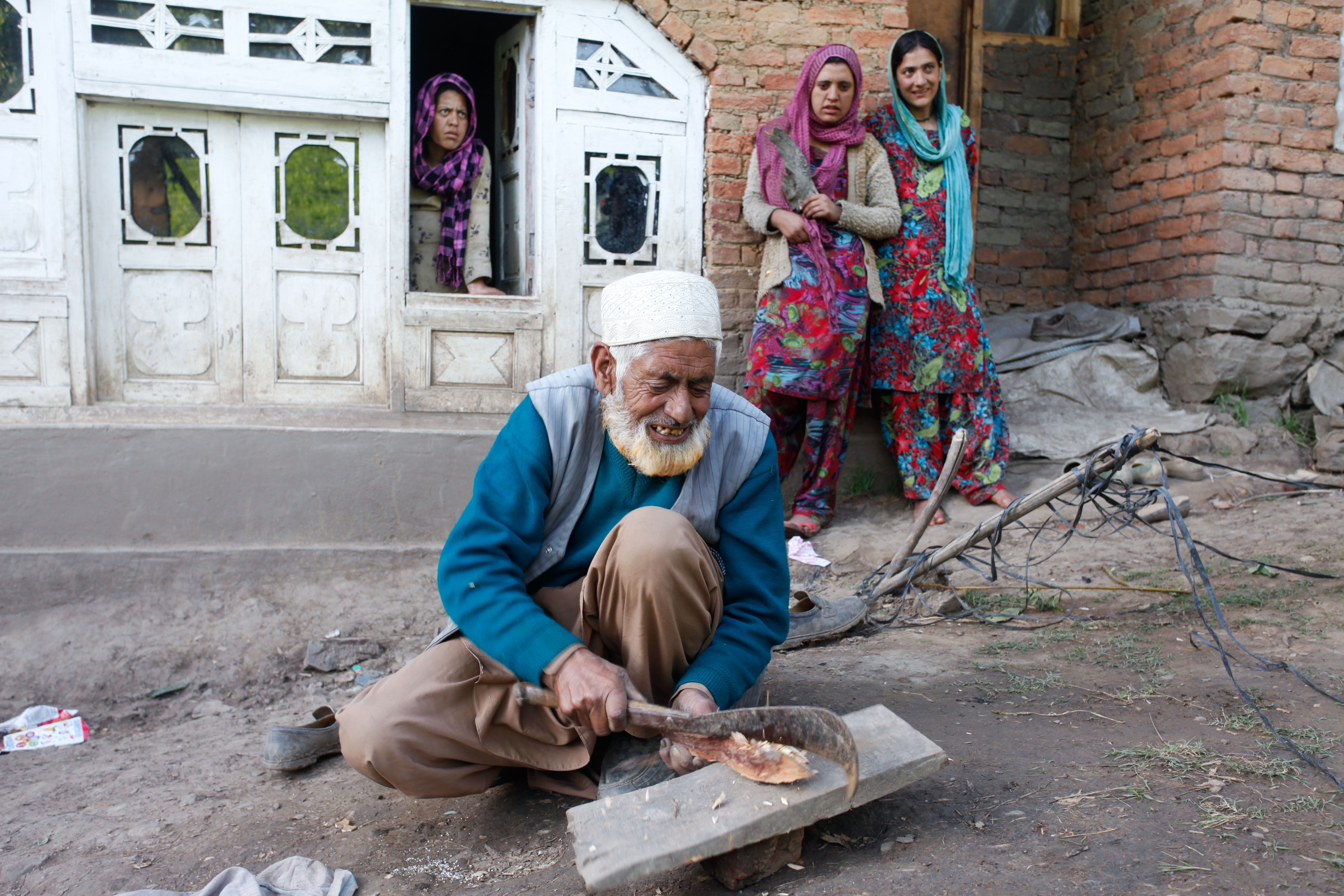
As the summer sun prepares to hide behind the verdant peaks of Khokher Mohalla – a sleepy village in the southern portion of Indian-administered Kashmir – Fazul-ud-Deen stands outside his house pounding a section of Deodar stump with a machete.
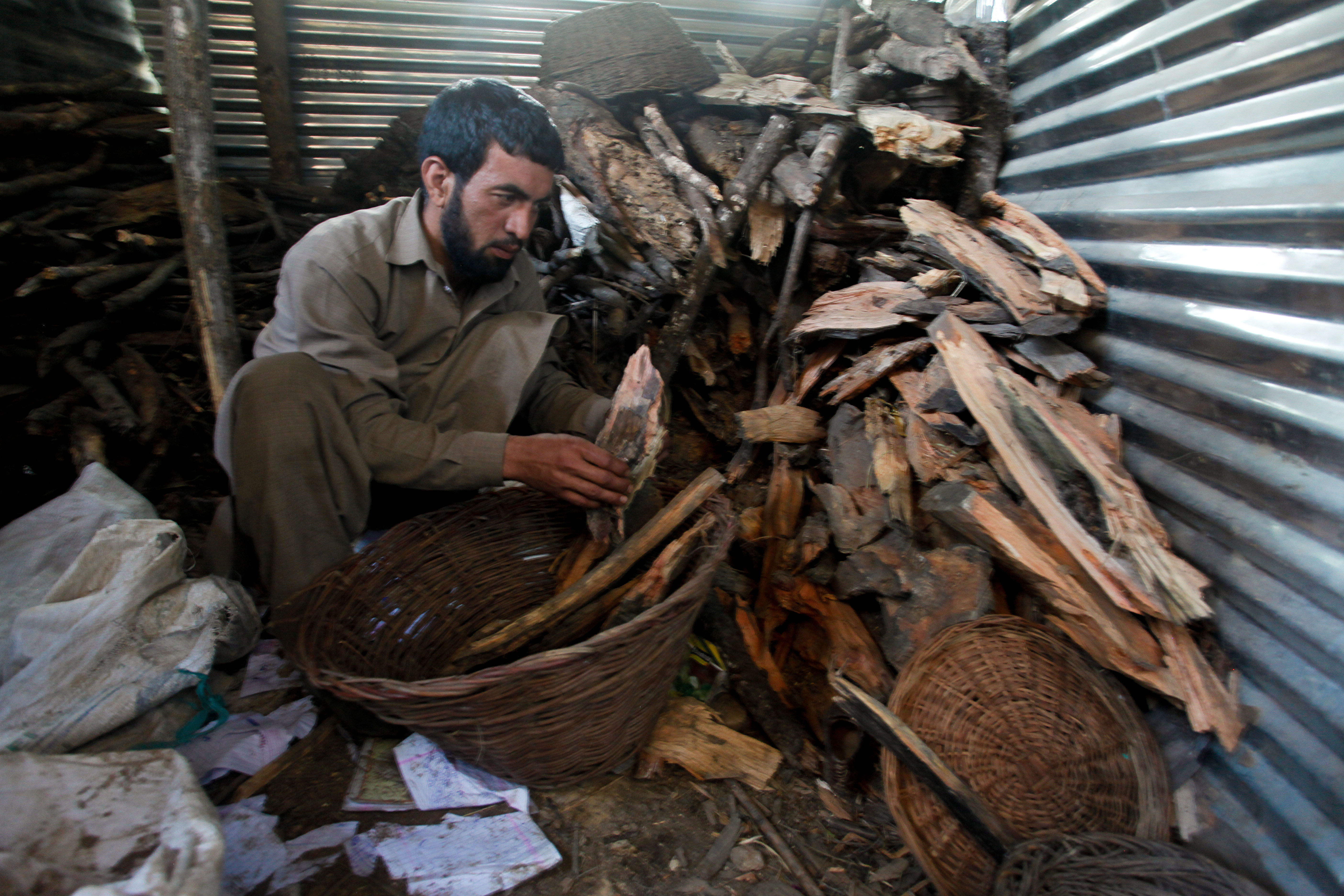
In just a few minutes, the 60-year-old manages to whack off what is in native parlance called Lae’sh – small greasy pieces of wood obtained from the middle of a tree stump and used to illuminate homes that would otherwise be in darkness.
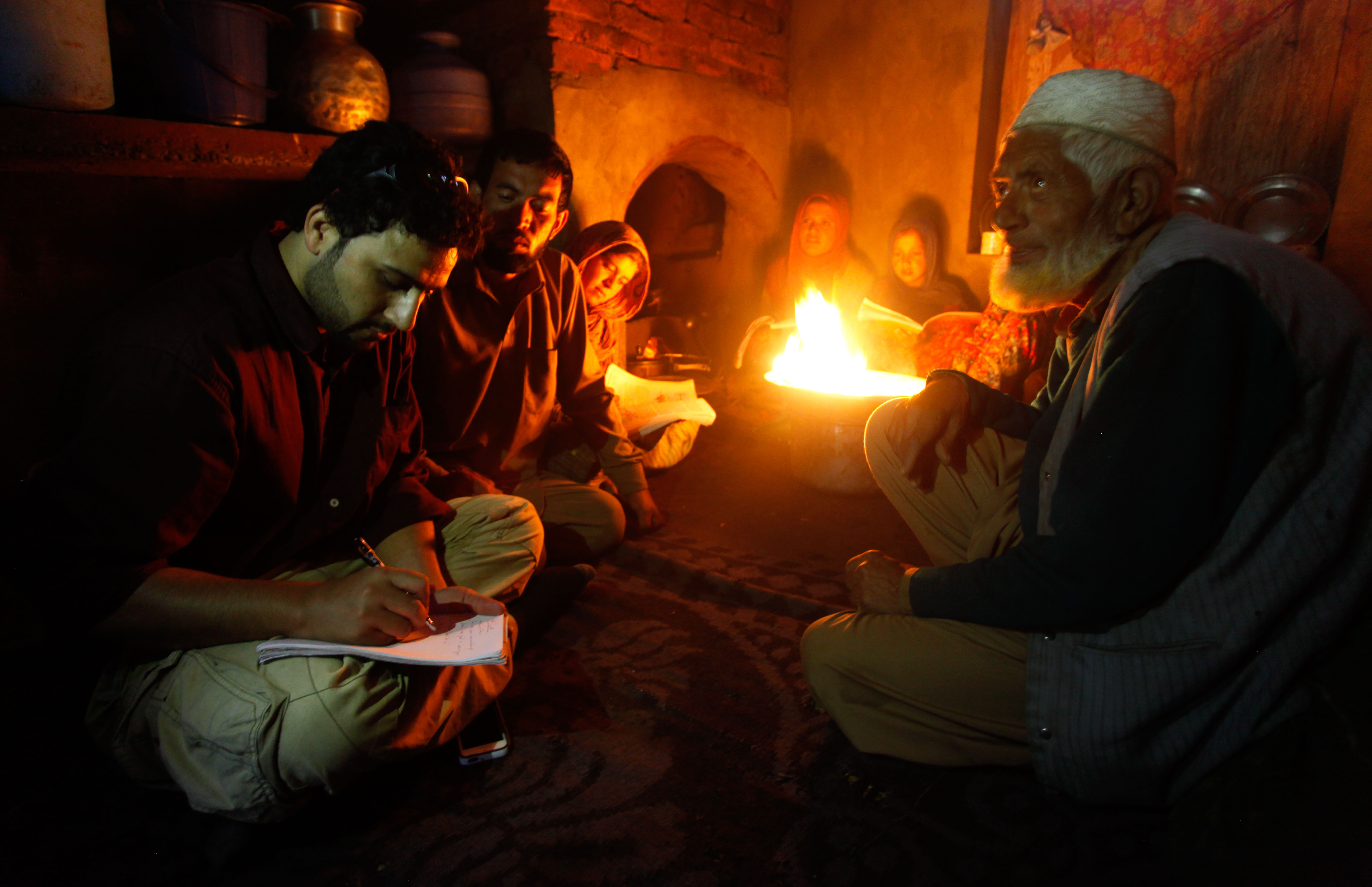
“It’s primitive. But that’s what it has been like for centuries,” says Deen, a lean man of average height with a hennaed beard, before stuffing a small circular iron container with the wooden pieces, which are then ignited and carefully placed in the middle of the kitchen.
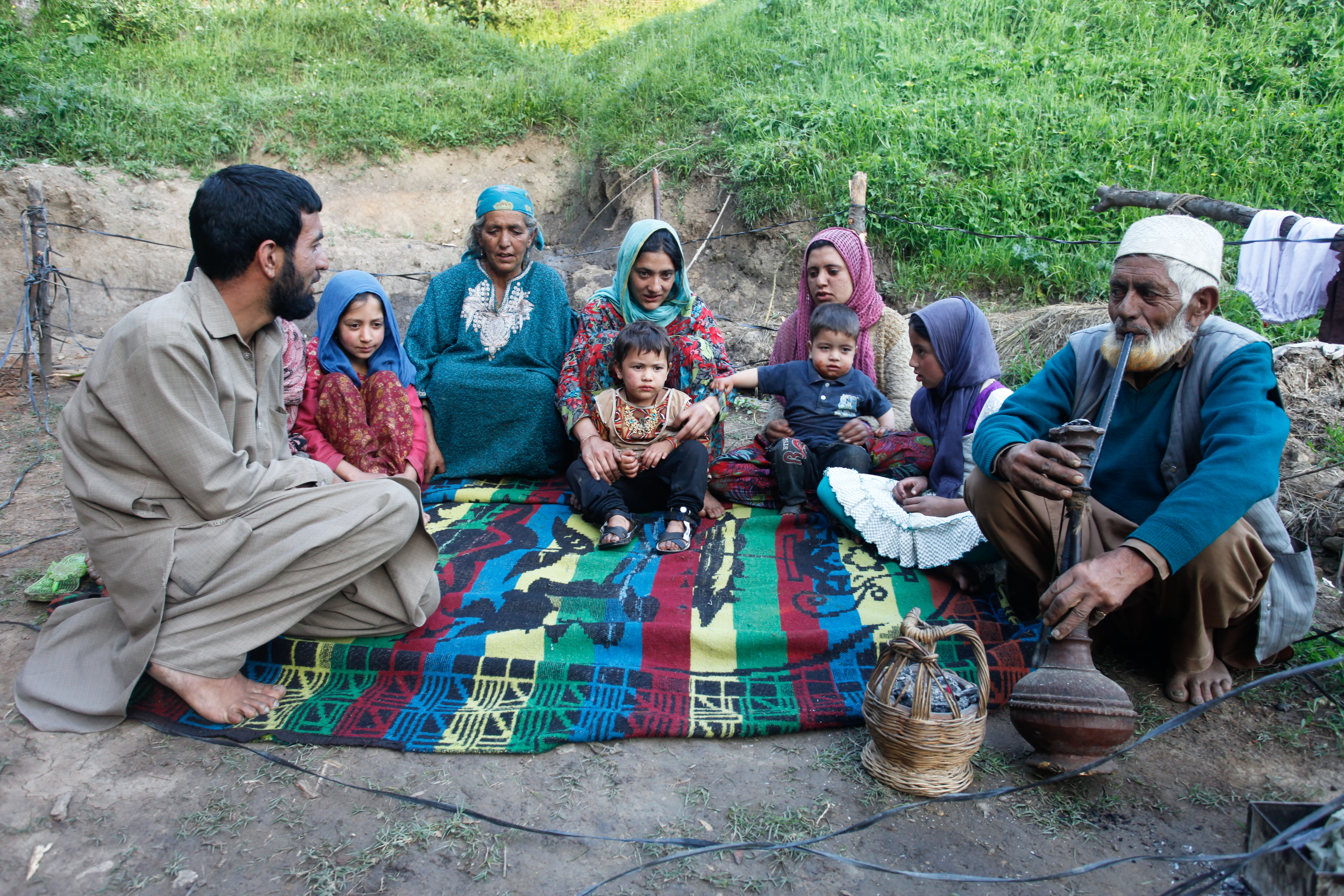
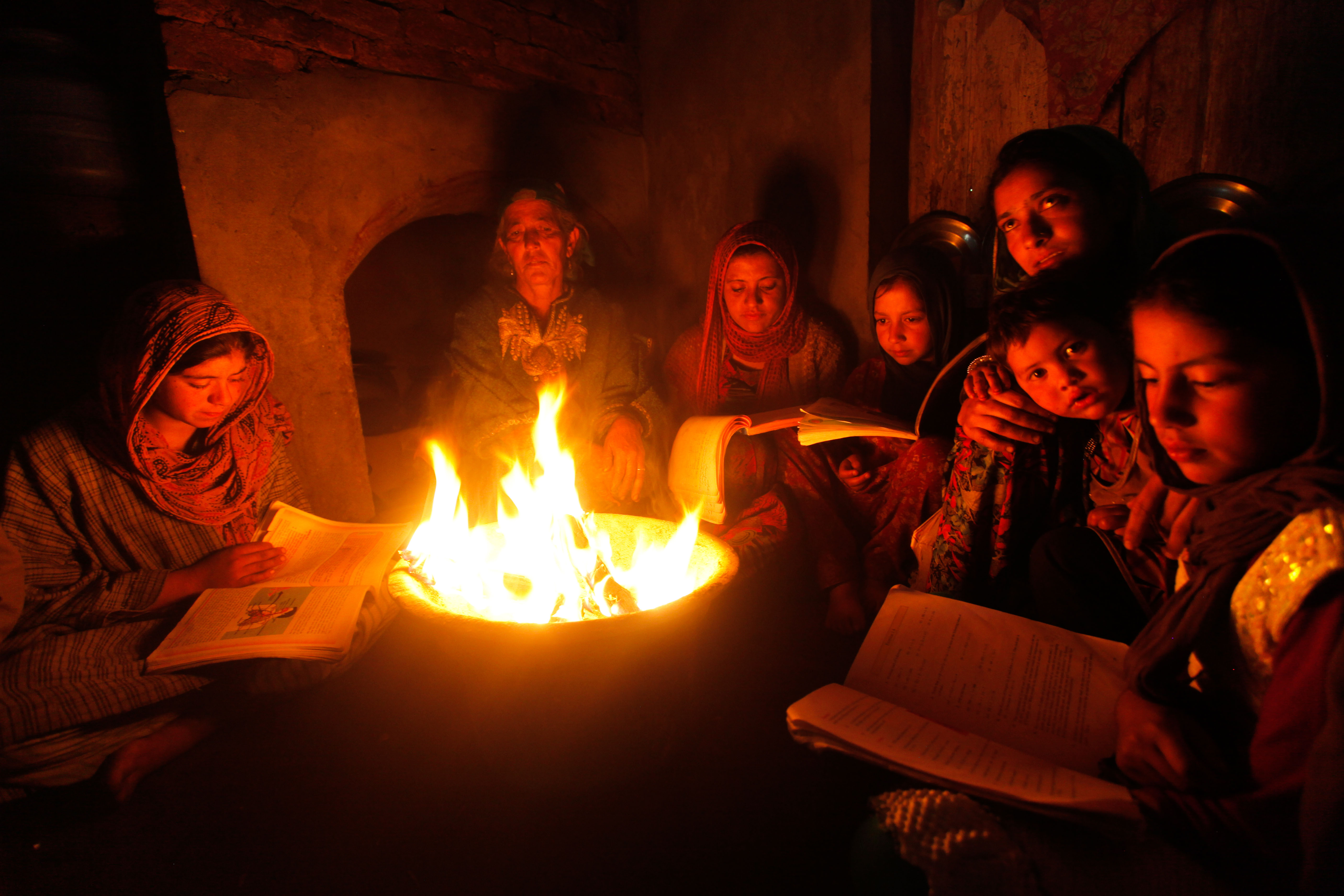
Every evening, in his dirt-floored, four-room mud-and-brick house, the family of nine – including four school-going daughters – study and eat around the burning Lae’sh.
A kilogramme of Lae’sh can radiate an orange-hued light for an hour and a half. But with the light comes smoke – a thick black smoke that is emitted from a small chimney after having coated the lungs of the house’s residents and the wooden ceiling above them.
“It’s within this time [that] we must finish [our] studies,” explains Deen’s oldest daughter Shameema, a Class 10 student.
“During exams, it becomes difficult to study for long. The smoke and pungency of the burning wood is agonising. The firewood smoke is telling on our eyes now.”
The dangers in the dark
Khokher Mohalla, a tiny village surrounded by slopes of cornfields for as far as the eye can see, is home to 20 shepherding families.
Not far from south Kashmir’s famous Kokernag tourist site, this is the heart of Kashmir’s darkness.
Reached first via a macadamized road and then snaking dirt tracks, residents of the village have never known electricity.
They have voted in the past for various pro-Indian politicians in the hope that they would deliver these most basic of human desires. But nobody did.
So they have shaped their lives without electricity, getting by in ways unimaginable to those from the developed cities in other parts of the subcontinent.
That means that when night falls, women and children must clutch pieces of burning Lae’sh as they walk – often in groups of two or three – to the toilets erected on the corners of maize fields, some distance from their houses.
And the dangers they face in the darkness are not inconsiderable: Himalayan black bears and speckled leopards often come down from the nearby mountains in search of easy prey.
“In the day our village belongs to us,” explains Deen’s son, Farooq Ahmad. “In the dark wild animals rule it.”
He describes a recent incident when a leopard killed a horse and a calf in the village.
Ahmad, a short man of 25 with a black beard and dark eyes, says he and two other villagers came face to face with a leopard last month as they were returning from the mosque after evening prayers.
“Luckily, the rendezvous ended when the animal lost interest and slipped back into the nearby woods,” he explains, adding that electricity would surely deter them.
Children are taught not to venture out after dusk, and the empty swings suspended from walnut trees sit idle – the flickers of Lae’sh the only sign of life after the sun sets.
When disorder is order
Young men make sure to charge the batteries of their mobile phones for free in the basement of a nearby mobile tower station, or otherwise to pay 16 cents for the service at a small shop 1km away.
In winter, warm water is rare, so children and older people bathe just once a week, after heating the water in a copper container over the firewood.
For Deen, the disorder seems to be the only order to life in the village.
“You can say… we’ve internalised it,” he reflects, lighting his traditional wood and copper hookah.
“When we travel to Srinagar [the summer capital of Indian-administered Kashmir, some 110km to the north] we feel people are so rich that they could afford electricity. But then it’s the government that offers [the] power which we have never got to taste.”
Deen describes how some families that could “afford” to relocate moved elsewhere, while others managed to buy one of the “cheap” Chinese solar lanterns that have flooded Kashmiri market places over the last decade.
“While taking the cattle up in the mountains for grazing, the shepherds tie solar panels on mule-backs during days. Back in the evening they connect these panels with the lanterns thus illuminating their homes,” he explains.
Most of the residents of these mountains are illiterate. They get by from foraging in the forests, grazing sheep and, during winter, finding day labour in Srinagar.
The authorities rarely visit Khokher Mohalla, but not long ago, the village and its adjacent hamlets used to be a fortress for anti-India rebels waging a guerrilla war against the half-a-million Indian soldiers stationed in the disputed region.
Deen remembers that time well – the army cordons, and the killings of civilians by local rebels. He credits a Pakistan-based group, Lashkar-e-Toiba, with finally taking on the anarchistic rebel factions and bringing order to the village.
“It was chaotic,” explains a local shopkeeper who is chatting to Deen outside his house. “The guns would blaze relentlessly. Thanks to the Lashkar mujahedeen, they brought order in this area. But before their arrival, the local rebels burnt down seven houses and killed many civilians.”
He says his older brother and nephew were among the civilians killed.
The lack of electricity made it even harder for the villagers to escape night assaults and to detect the movement of armed groups of all hues.
‘A most unfortunate village’
Now, with the armed rebellion at its ebb and the regional pro-India People’s Democratic Party (PDP) and the right-wing Hindu Bharatiya Janata Party (BJP) ruling in alliance, people like Deen and his son have hinged their hopes on the PDP fulfilling its promise of restoring key power projects to the state.
“[The] irony is [that] New Delhi illuminates factories and homes in India’s northern area from the hydropower generated from Kashmir,” says Deen’s son, Farooq Ahmad. “But people like us continue to live in darkness.”
“Ours is the most unfortunate village. We don’t even have televisions when the rest of the world has moved way ahead,” he adds.
But the lack of electricity isn’t only an issue in this village. It is a problem that has been a cause of simmering discontent across the state. In fact, there have been many instances when peaceful protests over the inadequate electricity supply have turned into violent anti-India demonstrations.
And there is little natural justification people can offer for the situation.
Kashmir is known for its glacial lakes, streams, and rivers and has enough water and gradient to produce 20,000 MW of electricity. But the state currently produces just 2,556 MW – thus leaving villages like Khokher Mohalla in the dark.
The reasons for this are manifold.
Firstly, of the total electricity created from Kashmir’s six major rivers and their tributaries by the National Hydroelectric Power Corporation (NHPC), a mere 12 percent is used within the state. The corporation trades the rest to other Indian provinces.
According to senior officials in the government of Indian-administered Kashmir, who asked to remain anonymous, the NHPC sells power to the Kashmiri government at inflated rates during peak hours.
Secondly, of the 12 percent that does go to Kashmir, 60 percent is wasted as a result of poor transmission and distribution lines.
Thirdly, many areas in the region are known to steal electricity. This has been a major headache for the various regional governments.
And, finally, the politics doesn’t allow the damming of river waters, thus restricting the possibility of creating more hydroelectricity.
History’s losers
In 1960, Pakistan and India agreed – under the Indus Waters Treaty, a water-sharing treaty brokered by the World Bank, – to divide Kashmir’s rivers. The Indus, Jhelum, and Chenab went to Pakistan. Kashmir can’t dam the waters of these rivers for irrigation or electricity purposes. India got the Ravi, Sutlej, and Beas rivers that feed much of northern India’s rice and wheat belts.
But villagers like Deen have little say in these matters, despite being the main losers in such power deals and river-sharing treaties.
And while the PDP has been vowing to reverse this trend, the federal government, led by the BJP, opposes any concession.
The wrangle continues.
“Sometimes,” says Deen, “I feel like selling my house and migrating to the city. But what will we do there? The mountains and maize fields are our custodians. I’ve played in them.”
The villagers understand the politics in the region and how difficult it will be for the government to illuminate their homes.
So, for now, the residents of Khokher Mohalla will have to continue living with the light – and the smoke – of Lae’sh.
SOURCE: AL JAZEERA MAGAZINE
