It is now the second-largest cause of unnatural death in the troubled region, but there is still no word for suicide in the local language.
Words by Baba Umar / Photos by Abid Bhat
December 2013
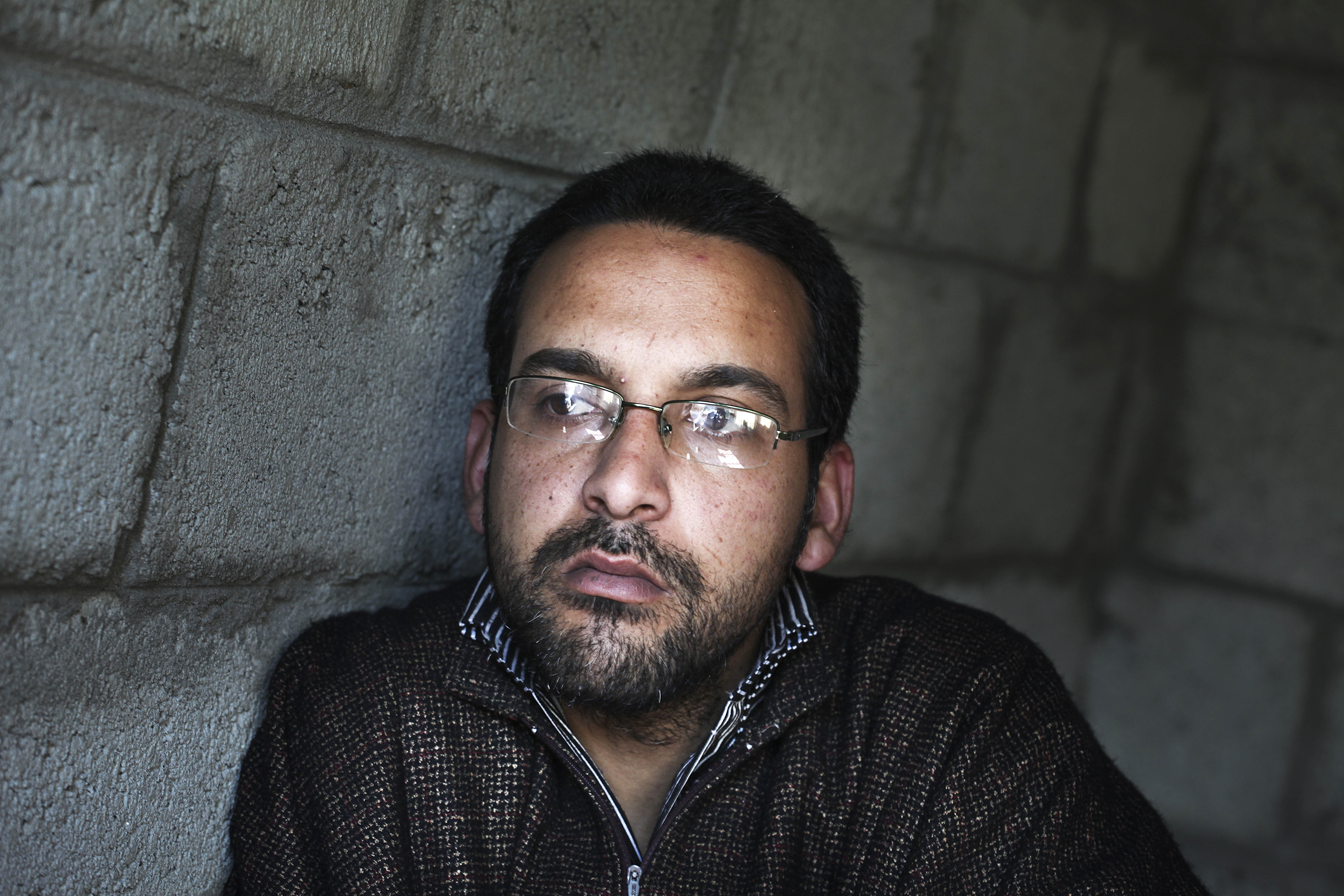
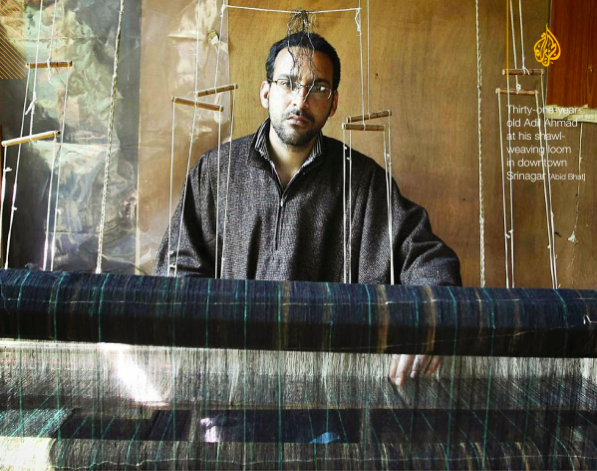
Thirty-one-year-old Adil Ahmad reflects on the seven times he attempted to take his own life. Sleeping pills were his method of choice for the first five. But after having his stomach pumped on each of those occasions, he resorted to drinking pesticides. In his last bid, he almost succeeded in slitting the artery in his left wrist before his father managed to disarm him.
“I just wanted to have a protracted sleep,” he explains.
Ahmad used to make a living weaving expensive cashmere shawls from pashmina goat wool in Srinagar, the summer capital of Indian-administered Kashmir until he was duped out of roughly $43,000 by a buyer. It was that incident in 2008 that sent him spiraling into depression.
“[It] changed my life completely,” he says, describing how his already impoverished family had to sell their house and ancestral orchard in order to pay off half of the debt Ahmad had accrued. In addition to this, his father had to take on a job selling groceries.
“Since then, for almost four years, I tried every method to kill myself,” Ahmad says, adding: “The doctors tried everything to save me – counseling, invoking Islamic faith, medicines and electric shocks, everything.”
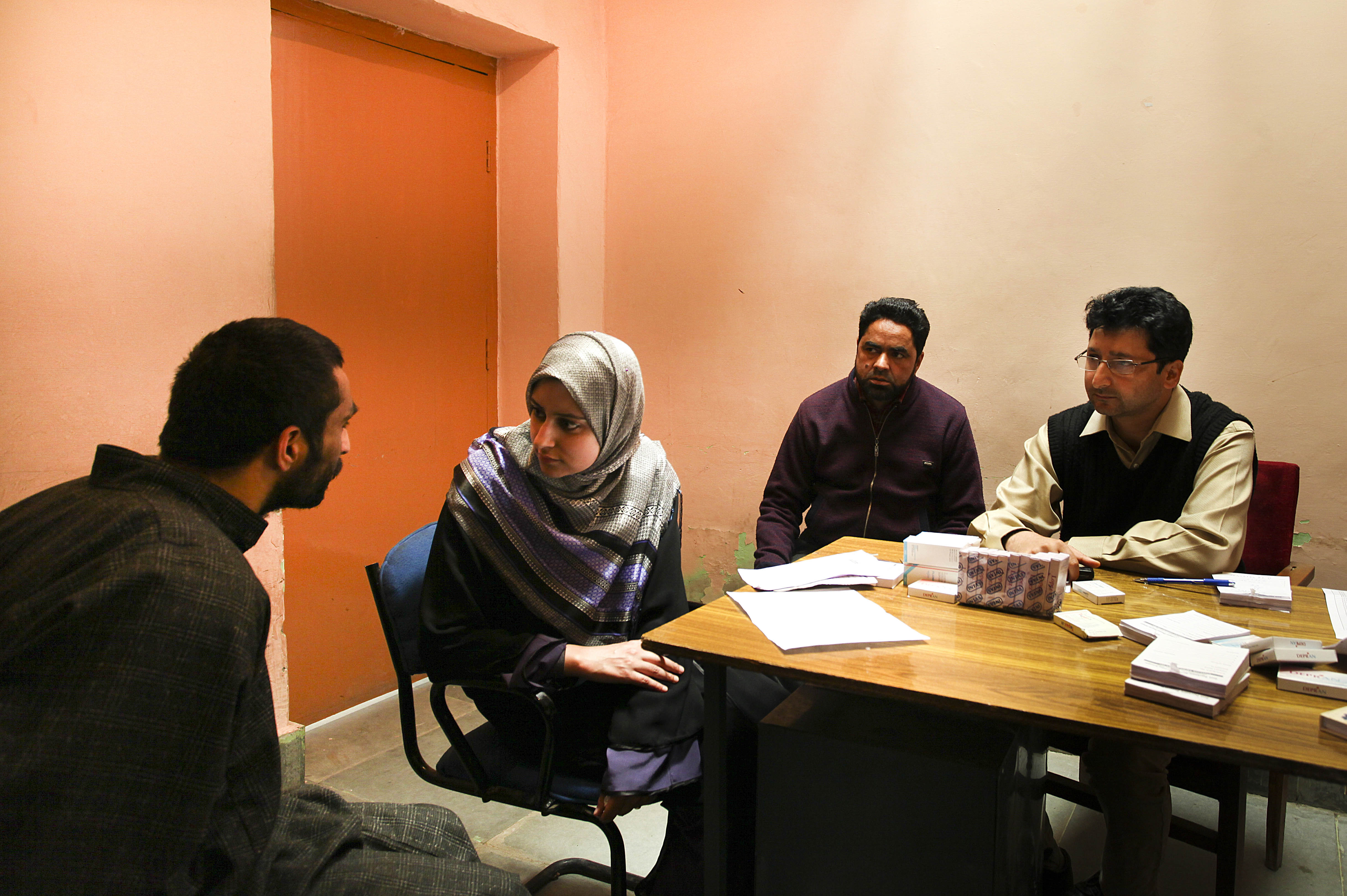
His family is relieved that the numerous counseling sessions – along with other forms of treatment – he underwent at Srinagar’s government-run Psychiatric Diseases Hospital seem to have had the desired effect, but Ahmad acknowledges that his family were far from his mind when he was trying to kill himself.
“I never thought of my four sisters, parents, wife and two children. They had no meaning in my life,” he reflects. “I know suicide is un-Islamic but I just wanted to end my pain.”
It is a sentiment 38-year-old Arshid Malik understands well. Haunted by incidents of violence he has witnessed in the conflict-ridden Valley, he attempted suicide 13 times. But, insisting that he is feeling better now and no longer wishes to take his own life, Malik refuses to be drawn on the topic.
‘Never tasted peace’
Ahmad and Malik are not alone. In 2012, there were 1,900 suicides reported in Indian-administered Kashmir. That is 13 deaths by suicide for every 100,000 residents of the region. And considering the stigma surrounding suicide among the state’s largest Muslim population, it is likely that this figure significantly under-represents the true scale of the problem.
But it wasn’t always so. According to a research of Psychiatric Diseases Hospital in Srinagar, prior to the outbreak of open rebellion against Indian-rule – and the resulting crackdown – in 1989, the disputed territory actually had the lowest suicide rate of all Indian states at just 0.5 deaths by suicide per 100,000 people. In 2006, international NGO Doctors Without Borders concluded that the rate had risen 400-fold in the region since then.
Now it exceeds that in the rest of India, which according to the same hospital, stands at 10.3 per 100,000.
“Suicide has become the second-biggest cause of unnatural deaths after conflict in Kashmir,” explains Dr Arshid Hussain, a noted psychiatrist and mental health expert at the Psychiatric Diseases Hospital.
It is a mental health crisis that Dr Mushtaq Marghoob, a leading mental health expert in the state, attributes to the trauma of living in one of the world’s most militarised regions in the midst of one of its longest-running rebellions.
“Kashmir’s population is scarred,” he says. “Two generations of Kashmiris never tasted peace. It’s the underlying poverty, socio-economic issues, trauma of insecurity amid conflict, and dejection at every level which is triggering this suicidal tendency.”
Many Kashmiris feel that while both India and Pakistan, which each rule a part of the region but claim it in its entirety, have moved on, they remain trapped in a dispute that has increasingly fallen off the international radar since the events of September 11, 2001, shifted the world’s focus elsewhere.
They may not top the news agenda of international networks anymore, but that does nothing to diminish the pain, anguish and despondency felt by those injured, orphaned, brutalised or just impoverished as a result of a conflict that has killed 70,000 and which continues to drag on.
It is a psychological scar that runs deep and, according to Srinagar’s Psychiatric Diseases Hospital, over 15 percent of the population of the region suffers from post-traumatic stress disorder (PTSD). Research by the hospital also reveals that one out of every five residents suffer from chronic depression, while substance abuse, particularly addiction to sleeping tablets or opiates, has increased significantly in recent years.
Before the outbreak of the conflict, Dr Hussain and his colleagues at the Psychiatric Diseases Hospital counselled around 1,800 schizophrenia and bipolar disorders but none of them were PTSD. Now they see more than 100,000. Despite this dramatic increase, the number of psychiatrists in the region has remained more or less the same. There are just 40 serving the almost seven million-strong population of the Valley.
“People hardly knew about [suicide] … before the late 1980s,” explains Hussain. “Being a predominantly Muslim and closely-knit society, it had [among the] lowest suicide rates [in the world] – comparable to Kuwait, which has [the lowest at] 0.1 per 100,000.”
“But,” the psychiatrist adds, “the past few decades have entirely changed the mental health of Kashmiris.”
“While some nurse back through counselling and medication, others are given Electroconvulsive Therapy (ECT), previously known as shock therapy,” explains Hussain.
ECT involves using a jolt of electricity to induce seizures in anestheticised patients. The method, which has its critics, was first introduced in the 1930s and is widely used to treat severe depression across much of the world. And Hussain is convinced that it played a key role in getting Ahmad back to his paddle loom weaving shawls again, somewhere he is sure he wouldn’t be “had he not responded to ECT”.
“Ahmad’s case was worrying to us too,” the doctor explains, adding: “ECT is a wonderful treatment in major depression cases.”
Challenging traditions
Unlike Ahmad and Malik, however, Zareefa (name changed) never had a chance to receive treatment for her mental trauma. On April 10, the 17-year-old consumed poison at her home in north Kashmir’s Baramulla district.
Hers was the ninth reported suicide in a two-week span in Indian-administered Kashmir. And, according to sociologist Bashir Ahmad Dabla, who teaches at the University of Kashmir and in 2012 published a study that revealed that of all those who have attempted suicide there over the past two decades 62 percent were female, women like Zareefa are the largest contributors to growing suicide rates in the region.
“In the years of conflict, many females were molested, raped, interrogated and harassed,” he explains. “Many of them became half widows, [the term used for those] whose husbands [have] disappeared but are not officially confirmed dead.”
These statistics are backed up by the Government of India’s National Crime Records Bureau (NCRB), whose figures also attest to the fact that more than half of those who commit suicide in the state are women.
Of course, exactly how many that is difficult to ascertain, for as one police officer explained on condition of anonymity, the actual rate could be much higher than the official one. “Not many report the crime,” he says, “mainly because of the social stigma attached to suicides in the Valley.”
Considered un-Islamic, it is widely believed that the Prophet Muhammad refrained from offering the funeral prayer for those who had ended their own lives in order to prevent others from doing the same.
The debate surrounding this came to the fore in 2002, after Zuhaib Ahmad (name changed) swallowed almost 150 sleeping pills and died on the way to the hospital.
Some residents of his Srinagar neighbourhood refused to allow his funeral prayers to go ahead, triggering tension between those on each side of the debate. Eventually, a senior religious cleric stepped in and decreed that the funeral prayers should take place in order to “end the dispute”.
But not all traditionally held attitudes and practices are changing. For some Kashmiris, mental health is still deemed to be largely within the remit of traditional faith healers and it is to them exclusively that many look for treatment for their depressed or suicidal family members.
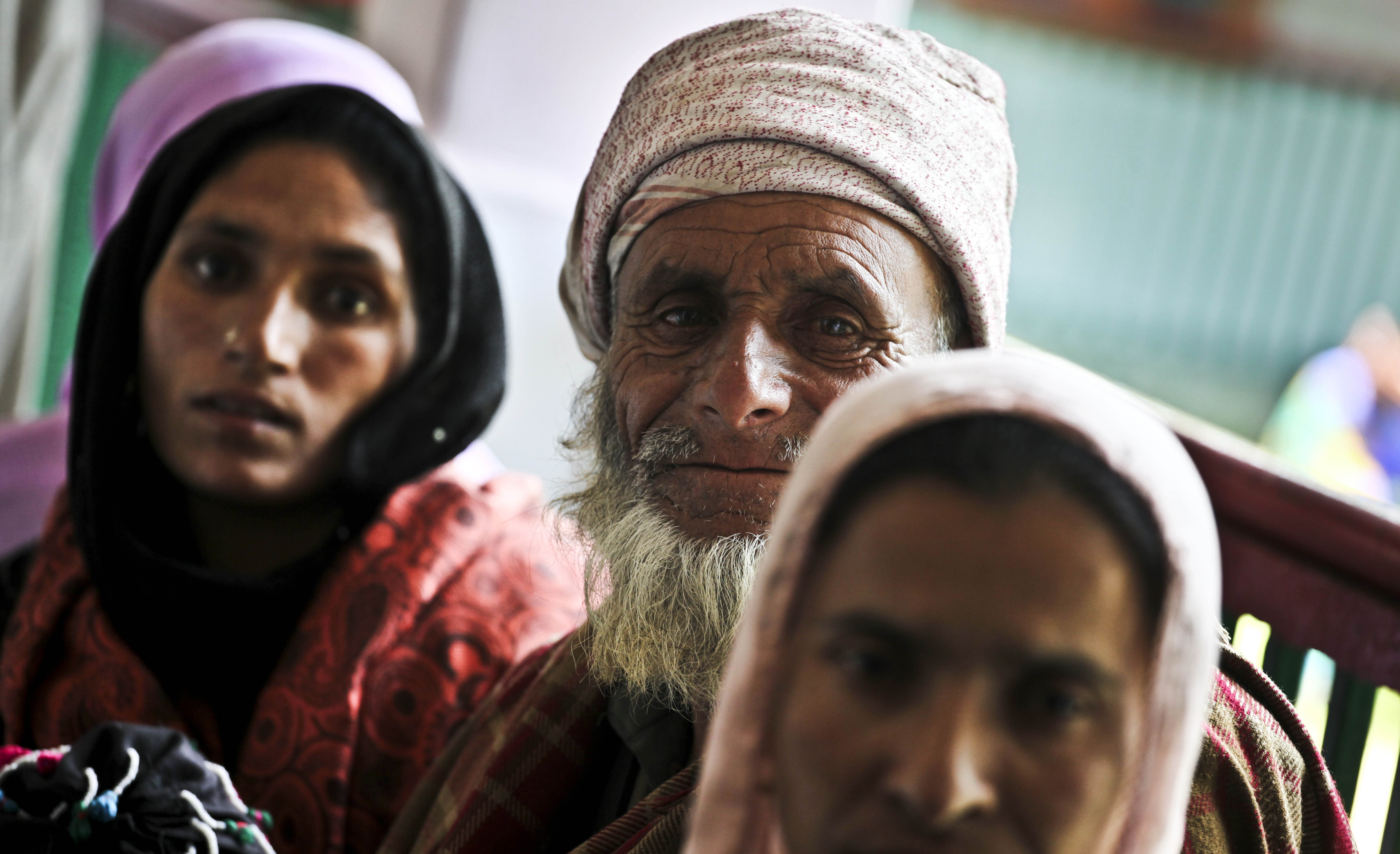
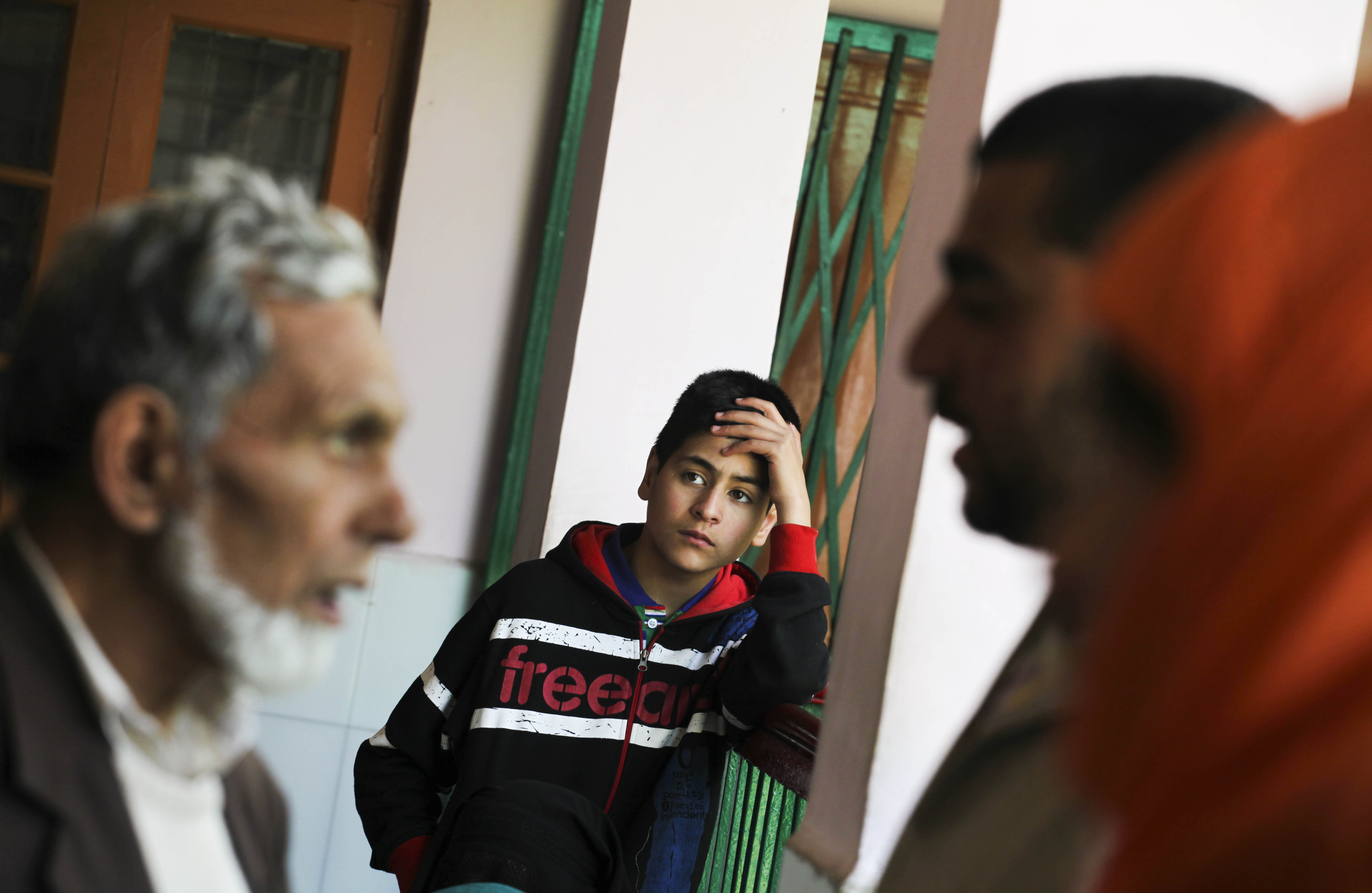
“In urban Kashmir, people are aware of mental diseases and most of them seek psychiatrists’ help to overcome it,” explains Hussain. “But in rural Kashmir, where 80 percent of the population lives, most of the victims are first taken to traditional faith healers where the relatives think the victim could be rid of ghosts.”
A deadly deployment for troops
Kashmir’s suicide epidemic has not only plagued its residents. In 2012, the Indian government stated that 1,362 Indian soldiers had killed themselves since 2001. Most of them were serving in Kashmir and India’s restive northeast when they killed themselves.
Mostly drawn from poor or lower-middle-class backgrounds, these troops are often stationed hundreds of miles away from their families in the highly fortified bunkers close to the deadly de facto border with Pakistan-administered Kashmir, or Azad Kashmir as it is known, or in the middle of hostile population centres.
According to Dabla’s research, somewhere between 1,500 and 2,000 Indian troops killed themselves. These men were serving in Kashmir when they shot or hanged themselves over the past two decades. That is almost half the number that have been killed in rebel attacks since 1989.
On August 8, 2012, 26-year-old Indian soldier Arun V Pillai, who was posted in the Samba district of Indian-administered Kashmir, allegedly shot himself with his service rifle after being denied leave.
His family says he had argued with his seniors who had sought to punish him by subjecting him to 36-hour shifts.
“There have to be cordial relations between the soldiers and the officers in a place like Kashmir,” explains his father, 55-year-old PG Vishwamohanan, adding his son was denied leave on festivals and he had told his family that he might be forced to take an extreme step “if the highhandedness of the senior officers continues.”
“My son could have been alive today. They snatched the only bread-winner of our family.”
While few expect the situation to improve any time soon, Hussain says he encourages his patients to take solace in faith.
“Shrines act as healing chambers for many patients. I’ve seen a mother of a disappeared son in a shrine speaking to and communicating with the dead as if her son is in front of her. Instead of ending her life she chose faith and spirituality gave her solace,” he says.
“If there is one single thing that [has] saved many Kashmiris from taking their lives, it’s faith. Unfortunately, [however, that] … is declining fast.”
Some names are changed to protect their identity.
SOURCE: AL JAZEERA MAGAZINE