May 2009
Srinagar
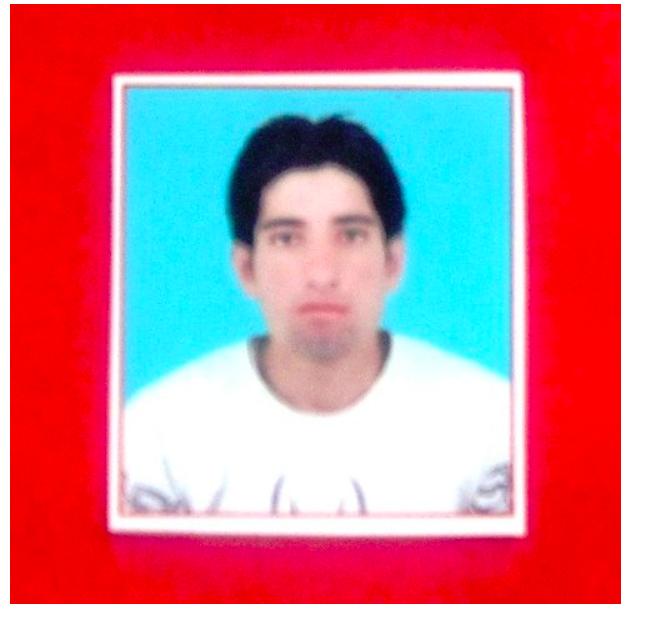
Arif, now dead, was not meant to look like this. His rosebud lips, long face, bright and clear complexion contrast with the monster reality of how he was shot and killed.
He was only 17 when he was aimed at and killed with the bitter accuracy of a “lawful” ‘uniformed- mercenary’.
In his own mind, Arif was not a warrior of 21st-century neither a rebel defending his territory with stones. But a motivated student who had study material in his hands when he was targeted.
On Friday afternoon after finishing prayers, Arif went home at around 2:30 pm, came back to collect some reading material from a close-by computer centre and fetched some friends for Rajouri Kadal — Srinagar’s enraged area where hatred against policemen and troops is bitter and profound. As the group reached Kawdara, where hundreds of youngsters had gathered to stone pelt the incoming wave of troops, the group sensed risk. Before they could think of getting out of the melee, Arif got separated from his friends when policemen and paramilitary CRPF strode in with force.
Spotting Arif in dark alley and parallel to a house where he had concealed himself, an obsessed cop thought to set off a projectile. Arif looked cautiously from the corner of the alley, his friends said later. His arm curved resting on his back. His one hand gripping rolled white pages of study material. And the other hand gathering support from the red brick wall.
Arif must have felt safe, but he didn’t stop pushing his head in and out of the alley. The cop aimed him. The viewfinder must have shown Arif’s face. The cop pulled the trigger. A flying tear gas canister left the cask. Soared for a while. And then hit Arif on his face. Injecting probably his right eye. The blood splashing the walls and mixing with Arif’s cries. The thud must have eased the grip on notes. The shell remaining closely pegged in the skin. Partially out and partially pegged into the drenched face. Its rear end detectable, soaked with blood. The other end breaking head bones and tattering brain muscles.
Arif must have felt deadness and the policeman content to see crowd dispersed. A small group of boys who surrounded Arif found it quite stiff to pull out the burning shell. Arif was numb. But his heart wasn’t. There was some hope. The group shouldered him to the hospital.
At SKIMS, Arif was placed in the ICU and was breathing on a life-supporting system until Tuesday afternoon. It took the policeman a few seconds to empty his barrel by pumping a teargas canister into the innocent face and it took Arif five days to lose the battle for life.
The 10th standard student vanished. The Royal Public School will look gloomy for a few days. Mudasir and Rahil would miss their friend for life. In Kashmir this is routine. Arif is a part of statistics. To the outer world, it hardly matters.
In an age of careless slaughter, such killing has become institutionalised. Policemen in riot gear see every jeans and T-Shirt clad, a hatchling stone pelter. Familiarity may make Arif a hero. He may be hailed as the ‘hero’ of Srinagar’s resistance. But watch out. We have been here before. For two decades, faces like Arif have bled and scythed in Kashmir streets. So observe the crimson cheeks, rosebud lips, bright and clear complexion that form the portrait of every Kashmiris worst terror: a young man who is being killed to satisfy a power that wears a uniform.
And together with the lack of regret, the cunning and the emotionless comments from jugglers who rule Kashmir could mean Arif soon becoming a poster boy of Srinagar’s resistance and the culprits, as ever, psychopaths.
Who wouldn’t have wanted to save this youngster? Everybody would have, except for the uniformed men who have menaced Srinagar streets into a permanent marsh.
They stroll with smoking guns in a squad of mindless vampires, haunting alleyways and road intersections.
The past week they forgot that Arif was just a teen who was not to be exposed to education through canister shells and bullets. And it was not his fault to pay that early, the fee of hate that is flamed with blood.
Meanwhile, Arif’s acquaintances say that common Kashmiris are very compassionate. But the pain has tentacles. It will always trail his mourning family.
